
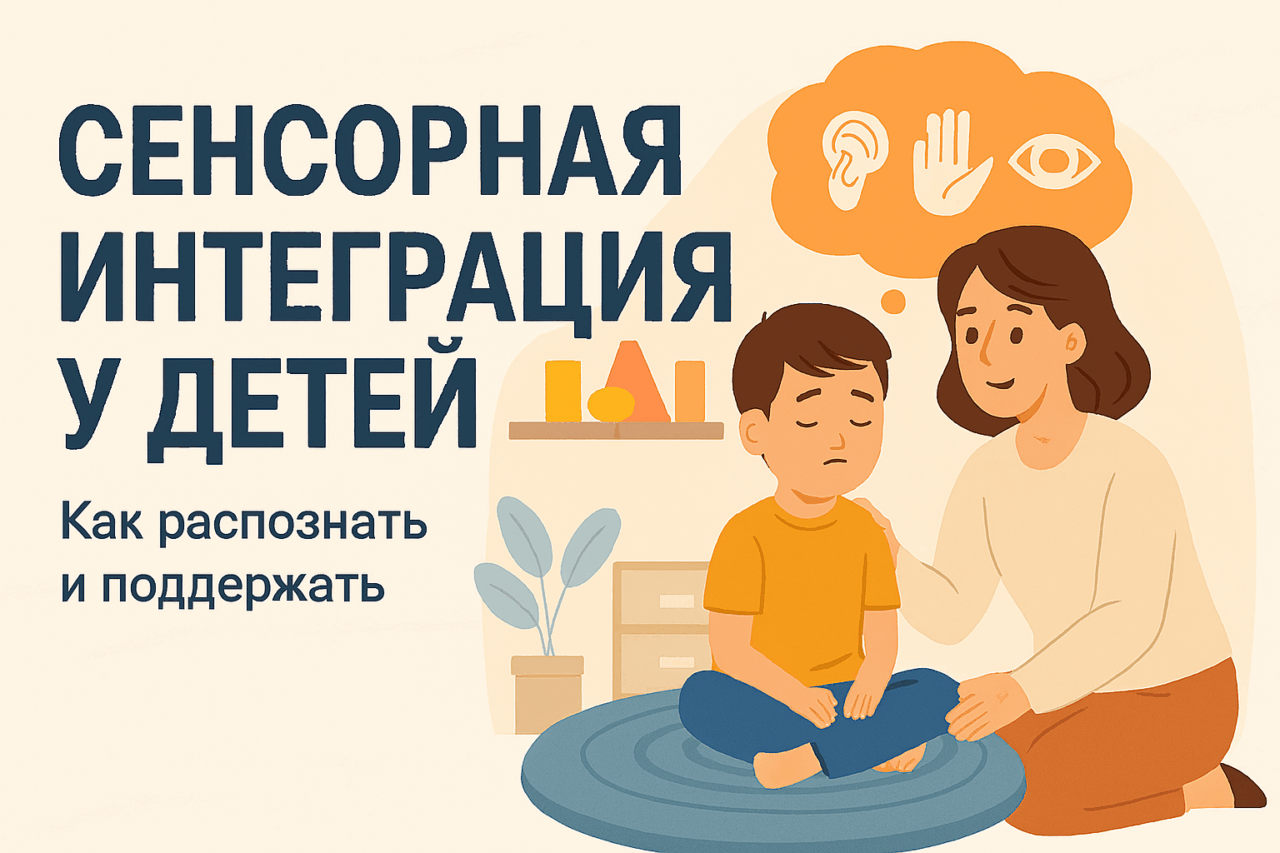
Sensory integration is the brain's ability to process signals from the senses: vision, hearing, touch, balance, smell, and taste. This enables children to adapt to their environment, play, learn, and interact. When integration is disrupted, ordinary stimuli — sound, light, touch — are perceived inadequately: as overload, anxiety, or, conversely, as something insignificant.
How to recognize the characteristics
Signs of sensory dysfunction can manifest in different ways:
- The child avoids touch, cannot tolerate bright light or sharp sounds
- Fears movement: swings, stairs, jumping
- Often appears overly excited or “detached”
- Has difficulties with coordination and concentration
- Tires quickly or loses interest in activities
It is important to consider age, individual characteristics, and context — many signs may be transient, but if they are persistent and hinder the child's adaptation, it is worth consulting a specialist.
A good pediatric neurologist can identify the problem fairly quickly and help resolve it.
Support and adaptation
A child can be helped through:
- Specialized therapy: occupational therapy, sessions in sensory rooms, balance exercises
- Home environment: soft tactile materials, a regular daily routine, minimization of sensory overload
- School conditions: individualized approaches, sensory breaks, workplace adaptation
- Emotional support: acceptance of the child's characteristics, teaching parents interaction strategies
Sensory integration is part of neurodiversity. Support at an early age helps the child adapt better, reduces anxiety, and enhances the ability to learn and interact. The main thing is not to force, but to understand.
When to seek help
If perceptual characteristics are persistent, hinder the child's adaptation at school, disrupt daily activities, or cause a high level of stress in the family — one should not wait for them to “outgrow it.” The earlier support begins, the greater the chance of forming a comfortable and safe environment where the child feels understood and confident. Parents are not obligated to understand all the nuances — it is enough to promptly seek an assessment from a specialist.