
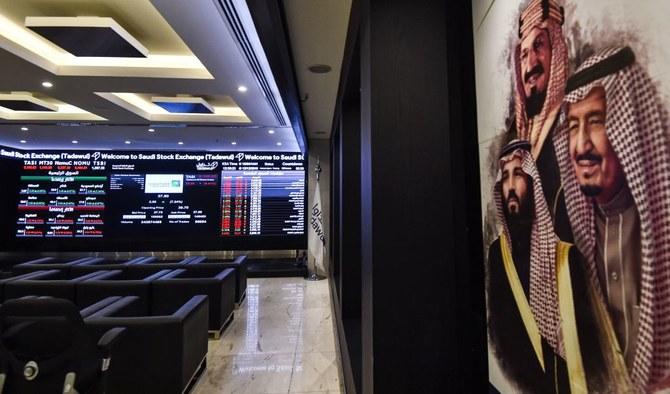
The main and parallel indices of Tadawul, TASI and Nomu, closed the preliminary budget session in the green.
After eight years of budget deficit, Saudi Arabia announced a projected surplus of 90 billion riyals ($24 billion) for 2022, with gross domestic product growth of 7.4 percent according to a Cabinet statement — an opportunity that creates a foundation for improvement in the stock market.
«The current budget demonstrates strong macroeconomic indicators that will boost confidence in economic growth and the continuous reforms needed to make the stock market more attractive to all investors in order to preserve positions,» Mazen Alsudairi, head of research at Al Rajhi Capital, told Arab News.
«Economic growth next year is supported by 4 percent growth in non-oil activity, and this is also another factor contributing to strong stock market performance, in addition to the expected increase in liquidity,» he added.
The Kingdom's budget picture for next year could have a major impact on investor sentiment amid uncertainty, potentially leading to a rise in the Saudi market.
Tadawul's main and parallel indices, TASI and Nomu, extended their gains in the post-budget trading session, rising 0.74 percent and 1.08 percent respectively in midday trading.
Increased investor appetite led to stronger exchange performance in the Kingdom, outperforming other Middle Eastern stocks. The UAE's main DFM index rose slightly by 0.25 percent, Abu Dhabi's ADX index lost 0.23 percent, and Qatar's QSI index declined by 0.07 percent.
Actual budget figures for 2021 may also contribute to the stock market's recovery. This year, the stock market has seen a recovery: many companies began generating profits after declines in revenue and profitability in 2020.
About 26 companies listed on the Saudi stock exchange this year swung from net losses in the nine months of 2020 to profits. Thanks to improved company performance, TASI rose 26.89% and Nomu rose 18.48% in the year ending December 13.
In the current fiscal year, the Kingdom's economy narrowed the budget deficit to 85 billion riyals compared with the initial estimate of 145 billion made last year, thanks to the recovery of markets affected by the wave of slowed economic growth and disrupted supply chains caused by the coronavirus pandemic. .
In 2021, revenue will amount to 930 billion riyals, in contrast to projected revenue of 846 billion riyals last year. The increase in revenue was linked to growth in Saudi Arabia's non-oil sector, in which revenue increased from 330 billion riyals in 2019 to 372 billion riyals in 2021, which is also a good omen for non-oil stocks in the coming period.
The overall positive indicators point to an upward trend in the economy and potentially better financial results in the near future, which in turn will raise the level of investor confidence in the market.