
Recent work they carried out to maintain the Kiswa included repairing its edges and tightening the belt that surrounds it.
MECCA: The Kiswa Maintenance Department of the Grand Mosque reported that it recently carried out work to maintain the Kiswa covering the Kaaba, repair its edges, and tighten the belt surrounding it, in order to ensure its best appearance during Ramadan.
The director of the department, Fahd Al-Jabiri, said: «This is part of the periodic work carried out by the unit entrusted with caring for the Kiswa of the Kaaba. This is carried out in accordance with an established program that is implemented through comprehensive maintenance and cleaning of the Kaaba throughout the year.».
This is part of the periodic work carried out by the unit entrusted with caring for the Kiswa of the Kaaba. This is carried out in accordance with a fixed program that is implemented through comprehensive maintenance and cleaning processes of the Kaaba throughout the year.
He added that, based on the operational and technical plan of the Kiswa Department, it is inspected and maintained daily by a specialized Saudi team, «some of whose members have more than 26 years of experience.» The team responsible for this task inspects all parts of the Kiswa, as well as the rings that hold it in place.
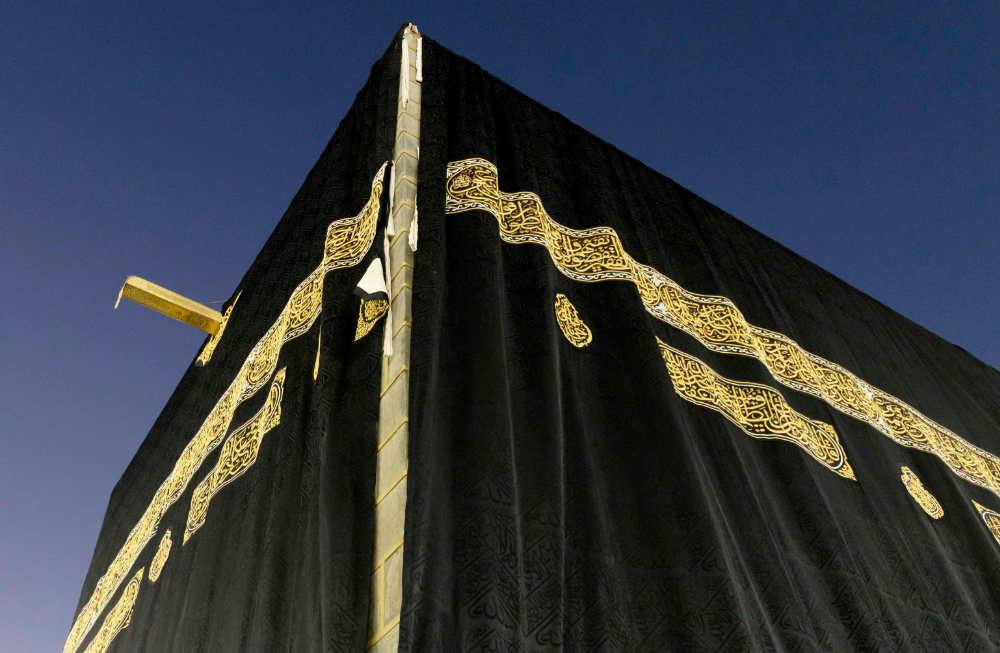
Describing the latest work, Al-Jabiri said: «The team of specialists and technicians organized the work and set priorities based on the adopted plan. It all began with tightening the Kiswa on the rings and rope in preparation for the holy month of Ramadan, because the Kiswa requires tightening, maintenance, and cleaning.
«It also maintained the frames of the Black Stone, Al-Hajar Al-Aswad, and the Yemeni Corner. All members of the technical team strive to apply the highest standards of precision, quality, performance, and completion in record time to complete the task while observing preventive measures to ensure everyone's safety.».
He said that the maintenance department affiliated with the General Presidency for the Affairs of the Two Holy Mosques uses the latest technology and the best materials during the Kiswa maintenance work «thanks to the attention and care given by King Salman and Crown Prince Mohammed bin Salman to the Two Holy Mosques and their visitors.» In the era of the First Saudi State, the Kiswa attracted great attention. It was imported from Egypt for many centuries, and this tradition ceased only in 1925. At that time, King Abdulaziz ordered the opening of a factory in the Ajyad area, near the Grand Mosque, for weaving the Kiswa. This was the first such facility in the Hijaz region dedicated to this task.
In the era of the First Saudi State, the Kiswa attracted great attention. It was imported from Egypt for many centuries, and this tradition ceased only in 1925. At that time, King Abdulaziz ordered the opening of a factory in the Ajyad area, near the Grand Mosque, for weaving the Kiswa. This was the first such facility in the Hijaz region dedicated to this task.
King Abdulaziz, and later his sons, continued to oversee and direct the production and development of the Kiswa. In March 1977, the factory was moved to a new facility in the Umm Al-Joud area of Mecca. It was equipped with the most advanced machines available at the time and continues to produce the Kiswa to this day.
In May 2017, King Salman issued an order to change the name of the factory to the King Abdulaziz Complex for the Holy Kaaba Kiswa.
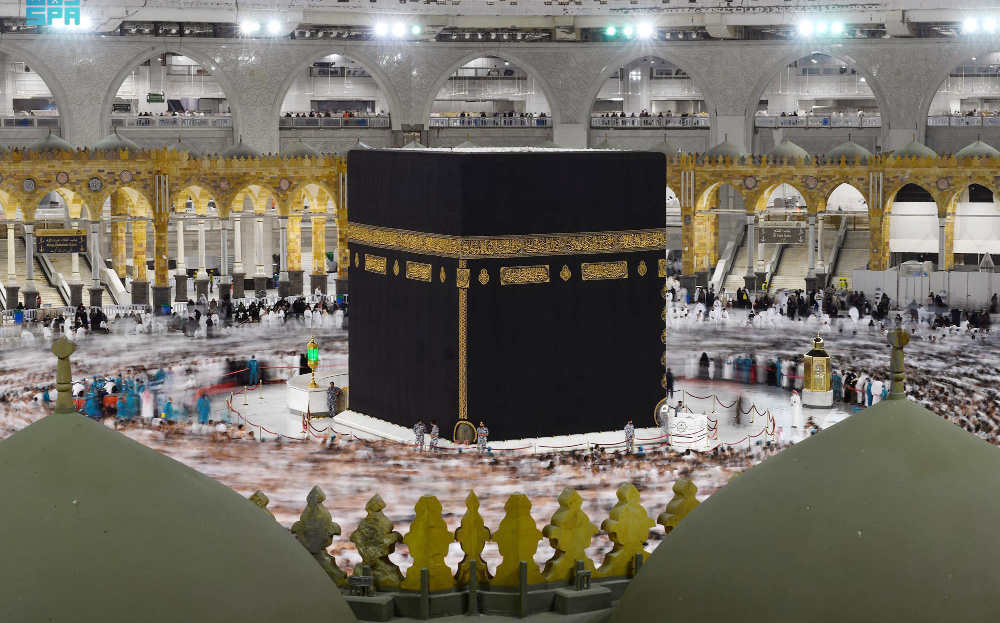
The complex has its own desalination unit, whose task is to maintain the quality of the water used in the production process, which is a vital component affecting the quality and texture of the silk. It desalinates the groundwater used in the washing and dyeing process, ensuring that the total ratio of dissolved solids does not exceed one part per million.
The complex also has its own dyeing unit, which first removes the protein layer known as sericin from the silk threads. The silk is then dyed black and green in hot baths with special chemicals that are carefully measured and mixed to obtain the desired colors. The outer cover is dyed black, and the inner cover is dyed green.