
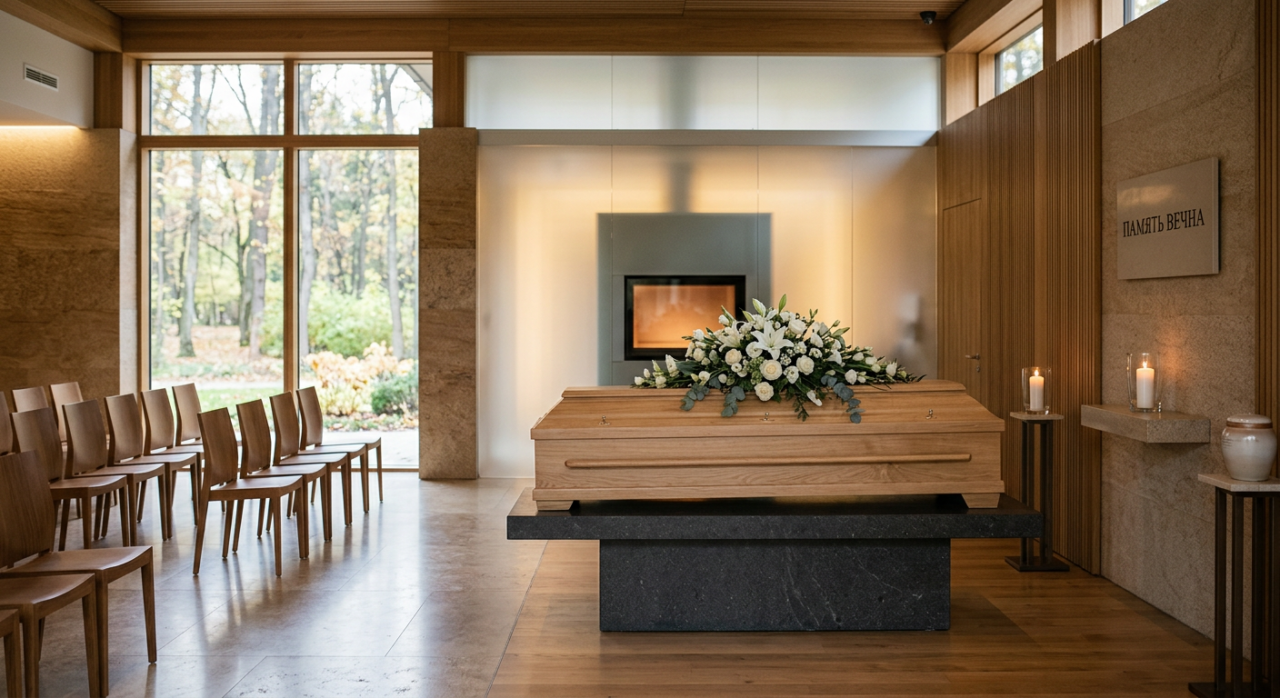
Cremation is an eco-friendly and budget-friendly burial method that is 30–40% cheaper than traditional funerals. In Nizhny Novgorod, the service is available from 25,500 rubles, with ashes released 1–2 days after the procedure.
How cremation is performed
The process begins with coordinating the date and time with the crematorium https://52ритуал.рф/uslugi/kremaciya/ — the service is provided without a queue within a week. The agent arranges transportation of the body from any morgue in Nizhny Novgorod to the crematorium at the Novo-Sormovskoye Cemetery in the Sormovsky District. This is the only operating crematorium in the Nizhny Novgorod Region.
Before the procedure, the body is disinfected and placed in a special cremation coffin. The incineration itself lasts 1.5–2 hours in a retort at a temperature of 850–1000°C. After completion, the ashes are collected, placed in a sealed bag inside an urn, and left to cool for 24 hours. On the second day, relatives receive the urn with ashes along with a state-issued cremation certificate.
Farewell ceremony
30–40 minutes before the appointed time, the family arrives at the crematorium for registration and seating of guests in the mourning hall. The farewell lasts 15–30 minutes; if desired, a priest is invited for the funeral service and prayers. After the coffin is closed, it is lowered into the cremation lift. The family may remain in the hall or accompany the coffin to the lift.
During the cremation itself, relatives leave the crematorium — presence in the technical area is not permitted under sanitary regulations.
Documents for cremation
In addition to the death certificate and medical report, an application for cremation is required, indicating the place of burial of the ashes, as well as the consent of all adult first-degree relatives if they reside in Nizhny Novgorod. In the case of death outside a hospital, a certificate from the forensic medical examination confirming the absence of a criminal component is required. If the deceased was diagnosed with HIV, hepatitis, or open tuberculosis, a sanitary physician's note is required.
The company prepares all documents independently under a notarized power of attorney. Relatives need to sign only two papers: the application for cremation and the act of transferring the body to the crematorium.
Options for subsequent burial of the ashes
The urn with ashes can be buried in an existing relative's grave without exhumation or in a new plot — approximately 0.5 m² of land is required for the urn. A columbarium is available at the Novo-Sormovskoye Cemetery with niches for one or two urns and a memorial plaque.
Under Russian law, scattering of ashes is possible outside cemeteries, but requires coordination with local authorities. The urn is certified for air and rail transportation, which simplifies transportation to another city or abroad. Storage of the urn at home is not restricted; however, many regions recommend burial within one year.
Why people choose cremation
Families choose cremation for several reasons. If the deceased during their lifetime notarially recorded a wish to be cremated, the relatives fulfill that expression of will. Transporting an urn to another city is simpler and cheaper than transporting a zinc coffin — only crematorium certificates are required.
Cremation with burial of the urn is 30–40% cheaper than traditional funerals. The eco-friendliness of the procedure is important for those who do not want to use a large plot of land, drywall slabs, or metal elements in the soil. When the family lives outside Nizhny Novgorod, the urn is easy to transfer or store until relatives arrive — it is more compact than a body in a coffin.
Important to remember
A pacemaker must be removed before the procedure — it may explode during cremation. Dental prostheses and surgical plates are left in place; chains and rings are recommended to be removed as keepsakes for the family. Electronics and aerosols are not placed in the coffin: phones, watches with batteries, and medicine canisters may damage the retort.
The urn must be collected within one year, otherwise the crematorium buries the ashes in a common grave. Only a special cremation coffin made of approved material without lacquer, metal handles, or synthetics is used for cremation.
Legislative framework
Cremation in the Russian Federation is regulated by Federal Law No. 8 «On Burial and Funeral Affairs.» If the deceased did not leave a written instruction during their lifetime, the decision is made by the spouse, children, parents, and siblings in order of priority. In case of disagreements, the matter is resolved in court.